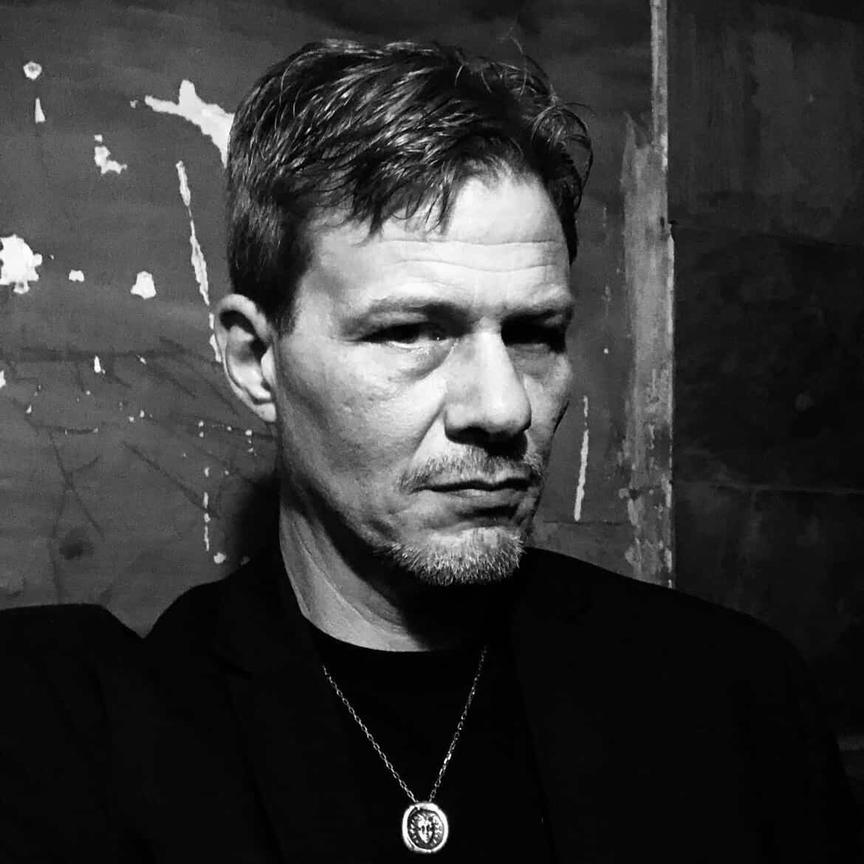
After six years, Samuel Goff returns to these pages. Following Transmissions, the first solo album from the multi-talented musician, producer, and label owner, released in 2020, he unveiled his second solo record, This Is My Body, This Is My Blood, in 2024. Radically experimental and deeply personal, the album is an introspective journey of self-discovery that led Goff to confront both his past and his present relationship with religion, as well as his own identity. His third album, Santiago, Mi Corazón, is forthcoming and reflects the time he spent living in Santiago, Chile.
In this deeply honest interview, the member of the noise-rock duo Among The Rocks And Roots and the avant-garde improvisation collective RAIC reflects on the narrative power of music and on the making of This Is My Body, This Is My Blood, an album in which the voice takes center stage. He also discusses his influences and life experiences, and how they converge in his work. Goff further shares insights from his recent years as the founder of one of the scene’s most left-field independent record labels, Cacophonous Revival Recordings, which already boasts an impressive 27 releases.
A rare glimpse into the mind of an artist who continually challenges both himself and his art — and a must-read from start to finish.
In 2020, you released your first solo album, Transmissions, and in 2024 you followed it up with This Is My Body, This Is My Blood. Both albums share a common thread: they are sonic narratives that use music as a medium to tell stories. What is it about music that makes it such a powerful tool for communicating your stories?
Since I was a child I have been fascinated by the ability music has to convey emotions and tell stories without the benefit of words. My dad was a big fan of spaghetti westerns and would watch movies like “The Good, The Bad And The Ugly” on Saturdays. Sometimes I would watch these movies and be transfixed by the music of Morricone and the way his music guided the characters and moved the story to heighten tension or introduce characters. Or even like the first 12 minutes of “Once Upon A Time In The West” where Morricone uses non musical elements to provide tension. Even at a young age I was very cognizant of this type of magic. Or sometimes my mom would listen to things like “Moonlight Sonata” by Beethoven and I didn’t understand why this made me want to cry. I had no conceived notion of heartbreak or longing, yet the music moved me to feel these emotions. Are certain notes trapped into our DNA to produce certain feelings? Isn’t that magic? My ten year old self thought this was absolute sorcery to be able to convey these emotions without saying a word. Throughout my life the music that always made the most impact was the music that successfully told a story or conveyed a certain emotion. When I started to write music on my own this was my goal. To hopefully be able to convey some of these emotions and tell stories myself. Become a magician.
When we spoke around the time of Transmissions, you mentioned that one of your goals was to avoid falling back on what you already knew. Did This Is My Body, This Is My Blood serve as a cathartic, personal experience, or did you approach it with the same desire to push your musical boundaries, but focused on a different theme?
Absolutely. My goal when I started the album was to push my boundaries and do something I haven’t tried before. And so from the start my goal was to use my voice to tell the stories. I had been playing music for a decade and had not written lyrics or done vocals so I wanted to do an album that is centered around my vocals. There was only one problem with this idea. I can’t conventionally sing, haha. So I started to explore other methods to use my voice aside from actually carrying notes. Spoken word came to mind so I started to explore the work of Tom Waits. I knew I could get away with metal vocals, and manipulating my voice backward on one song. It was fun and a challenge to get into this type of role where I was most concerned with telling a story orally as opposed to just thinking about rhythm or atmosphere. A lot of times during the recording of this album I was highly uncomfortable and felt like I didn’t know what I was doing but that’s a good thing. That’s how you grow and learn. Force yourself into uncomfortable situations and do your best to adapt and overcome them. This Is My Body, This Is My Blood delves into the role religion has played in your life.

You were born in the South of the US and raised in a Christian household. What was it like growing up there, and how have those experiences influenced this album?
In a way this album completed a process of examination and self discovery after my parents passed away. For a good portion of my life who I was as a person was very problematic for me. I would often try and hide my southern accent because I thought people would judge me as not intelligent or backward. I tried to distance myself from both my religion and my Southern upbringing. I even hid the fact that I was a veteran of the US Army. I was ashamed of the things Christians had done, I was ashamed of the south and being an avowed leftist I was ashamed of the things I learned the US Government has been involved with throughout its history. When my parents passed away I made an effort to understand who they were and in effect who I was as a person. I made a journey to my father’s coal mining hometown of Pikeville, KY. and spread his ashes in the mountains there. In therapy I started divulging the aspects of my childhood and started examining certain events that happened then. In fact the track “Faith Quenches The Violence Of Fire” sprung from a very true event that I started talking about in therapy and had not thought of in 30 odd years. What happened in this process was the understanding that people like my parents and concepts like Christianity and places like the South are touched with shades of gray. These things are not often black and white, these things are more complicated than that. People are shaped by their environment, sure, but it doesn’t have to define them. When I finished this period of self discovery culminating with the completion of this album, for the first time I became accepting of the concept of God and Christianity, and became proud of being from the South. I even became proud of being a veteran. I had let these concepts be defined by other people, I focused on the negative aspects of these issues. For the first time I became aware that I could be proud of who I am and where I am from without the negative stereotypes of others who define these things. To answer your question more directly, the starkest aspects of my southern Christian upbringing was the repression I felt which was most directly addressed in “This Is My Body” and guilt which was addressed in “This Is My Blood.” I was not allowed to listen to secular music which my God fearing mother called the “Devil’s music, music of confusion!” The only knowledge I had of any type of secular music was snippets I would catch from my dad who would listen to bluegrass like Bill Monroe or the Stanley Brothers and of country artists like Waylon Jennings, Merle Haggard and Conway Twitty. When I say in “Faith Quenches the Violence Of Fire” that the event that happened in that song marked the end of my childhood that was a very real fact. That event did cause my mother to lose her faith and from that point we stopped attending church and she no longer cared what I listened to, she gave up. At that point I gravitated to music that was confrontational and filled with aggression and prayed to the altar of teenage rebellion which was the trinity of punk, rap and metal. Sometimes I think about my lifelong obsession with music and wonder if the denial of music early on shaped my whole life. Is my life one long act of rebellion from being denied music at an early age? Would I be this obsessed with music if I had a normal upbringing? So for that, thanks mom!
It’s fascinating that despite the experimental and exploratory nature of this record, you describe it as “a fractured, dark, and gothic take on folk music.” Is this kind of free-form, genre-defying folk music the one that resonates with your personal story?
I guess it depends on how you define folk music. For me you could define it as the passing down of familial tales. The genesis of this album sprung from a couple of things. The passing of my parents and then shortly thereafter my son coming to me one night looking for answers and history. We spent hours on the back porch one night with me telling stories of my childhood and my parents and also his mother who had passed recently as well. I was orally passing down family history and thereafter it came to mind to maybe pass on these tales in the form of an album. Basing the album around religion helped to give the album cohesion and an all encompassing theme. On the surface one might not immediately look at these songs and call it folk music but on many tracks the folk music elements are there whether it is the oil drum percussion and violin in “Faith Quenches….” or the mandolin and harmonium on “I’m Never Coming Back.” For me though the most “folk” song on the album is “Witch Spit” since that track employs the oldest method of passing down tales which is with the voice. But barring instrumentation or what one traditionally conceives folk music for me it is the intent. By passing down familial history I have from the very beginning, thought of this as a folk album

Could you tell us more about the production process of this album? I’m sure many people would be interested in the details. For instance, the track “Witch Spit” was produced in a rather unique way — could you share more about how that came together?
Well this album was conceived fully before I started it, with a few adjustments here and there but two things I had always wanted to do since I started playing music was to create a song using nothing but bowed cymbals and to create a song using nothing but my voice. For the voice track “Witch Spit”, I had to have some type of story in mind so the basis for my storytelling was “what would a satanic ritual sound like… on another planet.” My goal was for this to be the strangest, most intense track I have ever been a part of and I wanted the listener to be afraid and exhausted. My time spent in Pentecostal churches where the believers “speak in tongues” proved to be a classroom as I implemented those ideas into the made up language I employed in the song. But before I share the conception of this track I need to give a quick shout out to my co producer and mixing engineer Richard Schellenberg. I’m very lucky to work with such a talented engineer and one with an open mind as well. I bring him these crazy ideas and he does not run away screaming he really helps craft my ideas and says okay to any insane thing I throw his way. I have always been very inspired by vocal artists. Musicians like Tanya Tagaq, Ghedalia Tazartes, Joan LaBarbara, Mike Patton and Maja Ratkje have always been huge influences on me. So I wanted to pay homage to these inspirations and craft a vocal track myself. The way I “wrote” the song was for a span of about 6 weeks, whenever an idea would strike me, I would record a voice note into my phone. Usually this was done driving with the windows rolled up. My neighbors would call the police if I rehearsed this in my apartment, haha. After i had about 100 recordings of me gurgling, spitting, screaming and whining, I started to loosely build a narrative and structure out of these recordings by numbering the voice notes and then performing them in the studio in order so Richard would be able to see the arc and structure of what I was doing. I had a very clear vision that I did not want any filters or manipulations to my voice. If there was to be a weird sound in the song I wanted it to be raw and organic and not through manipulated mixing. There is some light reverb in the final minute or so, but other than that there is no studio trickery involved. I spent about 6 hours in the vocal booth, screaming and spitting, take after take until there were about 180 separate tracks of voice for Richard to work with and then we spent about another 6-8 hours of mixing. At another session I recorded about 45 more seconds because I know this sounds crazy but I did not think the track was weird enough, haha. As far as the album goes I went in thinking this would be the hardest track to record and mix but it all came out pretty easy and got this down in one and a half studio days. The track that was the most intense production wise was “Faith Quenches The Violence Of Fire.” That one probably took about 2 months from beginning to end, taking about 4 full studio days. It started with remote recording going out to my friend and collaborator Nic DeSantis’ house to record the oil drum and metal percussion. Nic took the photography for the album and also directed the music video for “This Is My Body.” Then John Schuller sent me some basslines for the song from LA. Finally after getting the vocal takes down, which was a chore, it’s kind of a long story I tell, we got my good friend Jessika Blanks in the studio to nail down violin.

You’ve also brought in many collaborators from the Cacophonous Revival Recordings roster for this album. How did you choose the people you wanted to work with, and how did those collaborations unfold?
Well for my first album I was trying to prove something to myself so I wanted to make every sound you hear on that album myself. But for this one I had nothing left to prove and from the start wanted it to be very collaborative. As far as who ended up appearing on the album there were some folks who I just wanted to work with that I have always admired and then in other places it was more like “okay I need this instrument here, who do I know that can do that…” It is a blessing to know and be able to collaborate with so many talented musicians and I will always be in all of their debt for helping get my vision out into the world. For the track “Lamentation” the middle part of the song was a little boring after the mix was completed and I knew that section needed something so I called upon my good friend Lucas Brode to infuse the track with a thoughtful guitar solo. Lucas has a lot of musical knowledge so when I asked him for a “Marc Ribot esqe solo during his 1980’s run with Tom Waits” he knew exactly what I was talking about and nailed that shit. Calling up John Schuller, who was very instrumental in my weird musical direction and having him give me two basslines for “Faith Quenches….” was another happy collaboration. In addition to Richard, I had the chance to work with Damion Champ as a co producer on “This Is My Body” and Jen Kutler as a co producer on “Inheritance.” Damion is sort of this mad genius with just an entire room filled with any type of keyboard you could ever want. I am very happy with that track as we both fed off of each other’s ideas and the end result is a good combination of both of our strengths. The track I did with Jen I basically just wanted an excuse to work with her. Among The Rocks And Roots were on a short tour and our last stop was up in New York with Jen so after the show I stayed with Jen in her cabin in upstate New York and we mapped the track “Inheritance” over the course of a long 4 day weekend. Probably my favorite collaboration on the album was the guitar prodigy Gavin Wade on the thrash metal song “This Is My Blood.” Gavin was a friend of my son’s and he started following my band’s social media. I followed him back and the guitar videos he kept posting gave me pause. I was like wait a second this is REALLY good. I contacted him and told him I had plans for a metal song on my album and would he be interested in playing on the track. His playing was so good, I restructured the song to give him room for two solos. He was only 17 at the time and I told him in ten years when he is a metal god to not forget about me, haha. All of these collaborations were very special to me because to me these are not just people I know, they are literally my favorite musicians. Like I have been listening to John Schuller for over 20 years. And folks like Erik Schroeder, Zoe Kinney, Kyle Nagle, Opal X, Jessika Blanks and Benjamin Schurr are just straight up some of the best musicians I know.
In addition to your solo work, you’re also involved with the noise-rock group Among The Rocks And Roots and are a founding member of the avant-garde improvisation collective RAIC. Tell us a bit more about these groups. I know you’ve recently released Pariah with Among The Rocks And Roots, but are there any other releases in the pipeline?
Well for Among The Rocks And Roots we have been a band for twelve years now and we have released 3 double albums that were meant to be a trilogy from the beginning. Concept albums about our trials with addiction and subsequent recovery. We followed a sonic blueprint of very long songs, focused on intensity and volume. The music was meant to be difficult, you had to make an effort to embark on this journey with us. We are halfway through recording our next album and we have shifted our lyrical approach from the inward to out into the current world and is much more politically based. For twelve years Among The Rocks and Roots was a duo, myself and Abdul Hakim Bilal. We made the decision to add RAIC member Erik Schroeder to provide melodic elements on saxophone and keyboards so now we walk as a trio.

RAIC has completed a new album called Resurrection. And just like with Among The Rocks And Roots, RAIC has dealt with extremes in it’s history, our last album Gestalt was 72 minutes with like 18 guest musicians that we felt the only way to move forward was to strip all of that excess off. So this record is going back to basics…Guitar, Bass, Saxophone, Drums and we are just the original RAIC trio of myself, Abdul and Erik Schroeder. My other band project Discrepants with Richard Schellenberg has our second album completed. We need to touch up some things mixing wise so that record is 90 percent done. As far as other things, my third solo album Santiago, Mi Corazon is complete. It deals with my time spent in Santiago, Chile. I made three trips there for a total of six weeks and amassed over 300 field recordings in my time there. After that was complete I came home and arranged the recordings to attempt to create a cohesive narrative, a story that transverses someone’s life and experiences in the city. And of course since anything I touch ends up having very dark elements and this is no exception, this album is more celebratory and at times even happy. I was so pleased with the end results that I am currently following that same mold and making an album based off of field recordings I have gathered in my five trips to Mexico City. I will start putting this album together in March and I am quite certain it will be a double album based on the massive amounts of recordings I have from the city. I am having such fun with this, who knows maybe I might make a third album in this style. Morocco? Brazil? Cuba? Turkey? And because I always want to try something different I have plans for yet another solo venture to make an album built completely on samples, maybe a danceable album. No one would expect that from me!
Your label, Cacophonous Revival Recordings, has already released 27 albums. We’ve known each other since the beginning, and I can only say — what a journey it’s been, full of exploration and surprises! Looking back over the past six years of the label, what are your reflections, and how do you see it evolving in the future?
Well I have definitely learned a lot. One thing I want to do more of in the future is release every album on vinyl. I have been trying to get to a point where I can justify that financially and I think I am almost there. The main thing I wanted to explore with this label was to not be constrained by boundaries or genres. So my only disappointment really is that I haven’t released a metal album or a hip hop album. I want whatever release that is next to be something the listener is not expecting. Ever since I have been listening to music I have engaged with just about every genre. And then when I started playing music, I wanted to play virtually every genre. So that is my goal with the label, to release as much as possible and always keep the listener interested and engaged but also surprised. As far as the future, our next releases is a vinyl reissue from Camila Nebbia called Aura which is just literally one of the best albums I have ever heard. Not just from my label but ever. When I was getting to know Camila I listened through some of her discography and when I heard Aura I was stunned. I noticed that it had only been released digitally and I told her that the album is too good to just have a digital release and asked her if we could re-release that on vinyl some day. So that some day is coming up soon. After that I will release the Santiago album I just spoke of. And hopefully we will put out our first metal album next year from Ecolideth which I am highly stoked about.
There are already many standout releases in the label’s catalog. Which records would you recommend to someone new to Cacophonous Revival Recordings? What would be your guide for a first-time listener?
Well I have loved everything I have released. I am a fan first of all of these albums and musicians. For me the two things I look for most are music that doesn’t really fit in anywhere. It is sort of genre-less. Music that is just “other.” The four albums that best fit into this category are my debut solo album, Kyle Nagle’s Circle, John Schuller’s Lesser Angel Of Failure and the recent debut from Death Sneeze. These are all albums that are bastardized and when asked to describe their sound, you don’t really know how to answer. But they are not weird for weirdness sake. They are all personal and emotional at times. Another thing I look for is passion and intimacy. The best examples of this are Lucas Brode’s Vague Sense Of Virtue, Jessica’s Ackerley’s debut solo album Morning/mourning, Jen Kutler’s Sonified Physiological Indicators Of Empathy and Pariah by Among The Rocks And Roots. All of these albums vary greatly in sound but all have the same intent. They are all passionate and deeply personal and emotive. In some respects the label and my own music is a guide to my own personality. I consider myself to be very weird but also very emotional and contemplative so this is what I try to present to the world in terms of my own musical output and as far as what I release by the label.


